Category: Uncategorized

  • Why I Am Right to Hate my Family

    Why I Am Right to Hate my Family

    I sit here in this fucking house in the colonized town of Cerritos, California with the same Che shirt I’ve been wearing for three days and the beret that still smells like the Amazon package it came in, and I can feel the empire pressing in through the drywall.

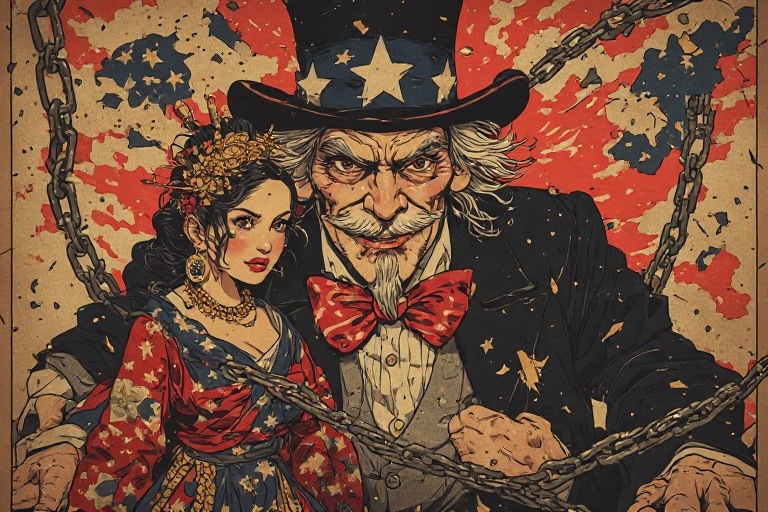
    My whole family is Americanized. They order pizza without guilt. They watch the Lakers and talk about fantasy football like the plantations never happened. They speak English at the table like Tagalog is some embarrassing cousin they don’t invite anymore. They look at me like I’m the problem when I try to remind them that every white boyfriend a pinay brings home is just another flag planted in our blood.

    They don’t get it. They never got it.

    I can’t leave this house. Not really. The second I step outside I’m surrounded by the same settlers who took everything and then had the nerve to make our women prefer them. I see it every day online. Another Filipino girl with some tall white guy whose ancestors probably owned the ships that brought the first guns. She posts the picture like it’s nothing. Like it isn’t a personal betrayal. Like it isn’t the final stage of colonization happening inside her own bed.

    I tell myself it’s ideology. I post the essays. I quote the theory. I say the words “settler-colonial desire” until they taste like metal. But under all of it is the same quiet, rotting truth I never say out loud:

    No one wants me.

    Not the girls from the old neighborhood. Not the ones at the Filipino market. Not the ones who still speak the language better than I do. They scroll past me like I’m already dead. They choose the white ones every single time and then have the audacity to call it “preference.” Preference is just the polite word for surrender.

    I can’t keep a job because every workplace is just another outpost of the same machine. I tried. I showed up. I lasted until some soft-handed manager told me to “smile more” and I felt the centuries of occupation rise in my throat. So I quit. Or they fired me. Same difference. The empire doesn’t want men who see it clearly.

    My family looks at me like I’m broken. They don’t understand that I’m the only one still fighting. They think the war is over because they got cable and Target runs and the ability to say “I’m Filipino-American” without choking on the second half.

    I hate them for that. I hate the way they laugh when I talk about liberation. I hate the way my sister rolls her eyes when I explain why dating white is violence. I hate the way my brother calls me “Che of the Valley” like it’s a joke instead of a warning.

    Most of all I hate the quiet that comes at 2 a.m. when the house is asleep and the only thing left is the knowledge that no woman is ever going to choose this. Not the body that hasn’t seen sunlight in months. Not the mind that can’t stop cataloguing every historical wound. Not the man who still lives in his parents’ house because the outside world is already lost.

    So I stay inside. I keep the beret on. I keep the posts coming. I keep telling myself the rejection is political instead of personal.

    Because if it’s personal, then I’m just another lonely brown guy in Los Angeles who can’t get laid and blames the entire history of the world for it.

    And that version of the story is the one I can’t survive.
  • Burned Barong, Broken Blood: How Two Filipino Women Chose White Men and Forged My Anti-Imperialist Rage

    Burned Barong, Broken Blood: How Two Filipino Women Chose White Men and Forged My Anti-Imperialist Rage

    Why does this keep happening? First Mom… then her. Two Filipino women, the two who were supposed to have my back, and both chose white men over me. Over us. Over everything we were.

    I still remember the day Mom brought him home. That tall, pale American with his fake smile and his loud voice. She looked at him like he was salvation. Like Dad—my real dad, the one who worked himself to death in the rice fields and the factories back home—never existed. Suddenly our little apartment smelled like his cologne instead of adobo and rice. And me? I was in the way. Too brown. Too quiet. Too much of a reminder of the life she wanted to escape.

    He made sure I knew it. The slurs started small, then got sharper. “Faggot.” “Little bakla.” He’d laugh like it was a joke while Mom stayed silent in the kitchen. And that barong… my barong. The one Lolo gave me before we left the Philippines. Pure white, embroidered with the patterns of our ancestors. He called it “peasant shit” and burned it in the backyard grill while I watched from the window. The smoke smelled like my childhood dying. Mom said nothing. She chose him. She always chose him.

    Years later I thought I’d broken the cycle. My girlfriend—beautiful, smart, from the same province as my family. She understood the weight we carry. The colonial hangover. The way the world still looks at us like we’re maids and delivery boys. We talked about it for hours. Then one day she left. For him. Some white guy from her office. “He’s different,” she said. “He makes me feel… safe.” Safe. From what? From me? From our own skin?

    The pattern hits like a slap. Filipino women choosing the colonizer’s sons. Again and again. Mom did it. She did it. How many more will trade their history for blue eyes and a passport? How many more will let their sons watch their culture burn?

    No more.

    That’s why I stay focused. Laser-focused. This pain isn’t just personal—it’s political. It’s imperialism in the flesh. White supremacy didn’t end with empires on maps; it lives in bedrooms and family photos. It whispers that our men aren’t enough, that our traditions are backward, that whiteness is the upgrade. My stepdad wasn’t just an asshole—he was the boot on our necks wearing a friendly face. The system that taught my mother to hate her own reflection.

    Every book I read on anti-imperialism, every protest, every late night organizing… it’s reclamation. It’s me refusing to be the broken son, the abandoned boyfriend, the cultural casualty. I’ll tear down the lies they built this world on. I’ll expose how the same forces that colonized the Philippines still colonize our hearts and our beds today. My dignity isn’t gone—it’s forged in this fire. The rage has purpose now.

    But they will not take the revolution I’m becoming.

    They took my family. They took my girl. They tried to take my identity. Enough is enough.

    Not one more inch.

  • Why US Imperialism Is Bad For the Philippines

    Why US Imperialism Is Bad For the Philippines

    Why American Imperialism Still Fucks the Philippines

    Isolation acts as an amplifier. Without the buffer of friends or local connections, your internal monologue takes center stage. You might find yourself thinking, “I should have achieved more by now,” or “Why do I feel so lost?” These are not new thoughts. They are echoes. They are coming back because you are outside your comfort zone. The environment has changed, but your brain is still trying to use old maps to find its way around

    My mom left my father in the islands for a white man. She packed up her life and came here chasing something bigger, stronger, more promising. America, in the shape of my stepfather. He became the new authority in our house—the firm, dominant presence who would “provide” and “civilize.” My mother remained subordinate, soft and yielding under his rule, just like the Philippines learned to bend beneath the weight of imperial promises. She traded one set of chains for another that felt like elevation. I followed her here, chasing the same illusion of belonging, only to discover I was simply another brown boy made smaller by proximity to power.

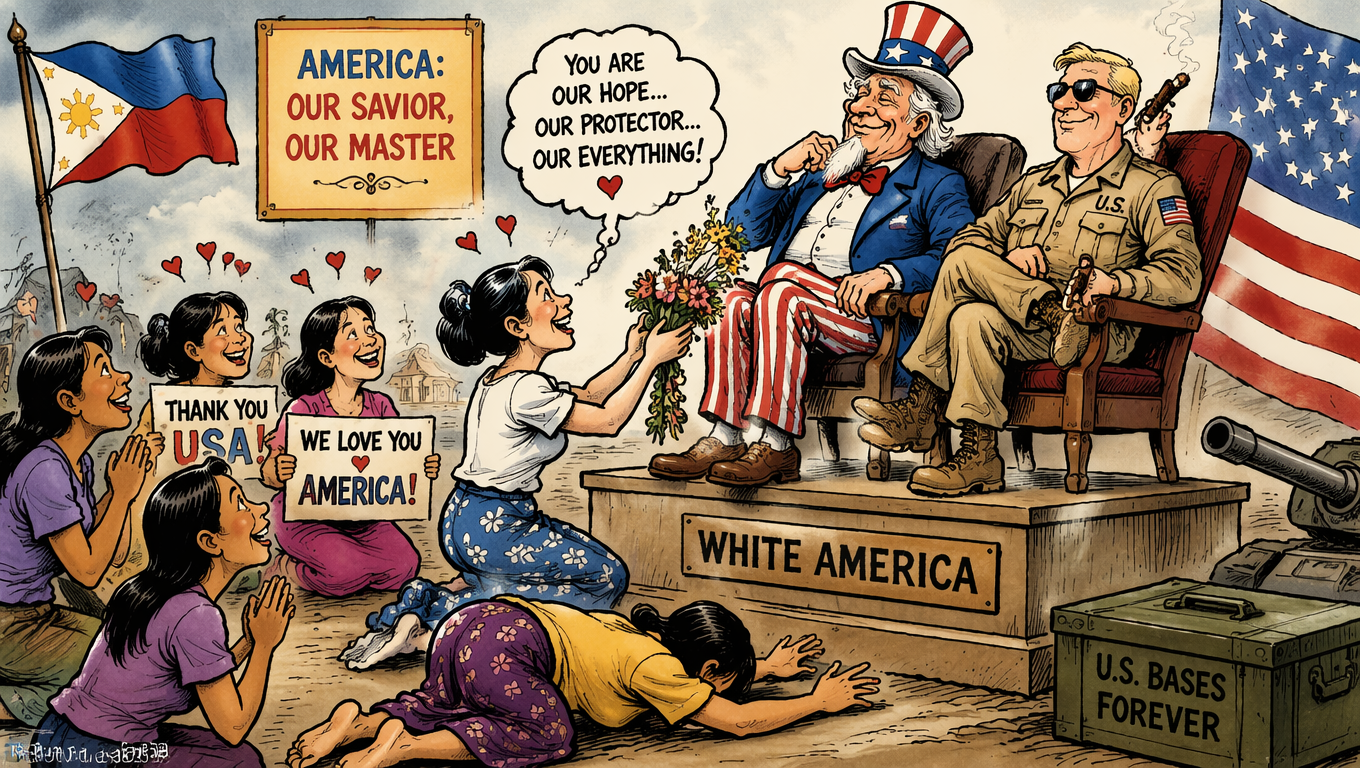
    That’s the personal truth behind the national wound. America didn’t just colonize the Philippines in 1898. She seduced her the way my mother was seduced—promising guidance, protection, a firmer hand. What she delivered was conquest dressed as maternal care. The Philippine-American War broke us open with superior size and force, water cures and massacres that taught us exactly how small we were. Then came the cultural rape: Protestant guilt layered over raw sexual exploitation. Bases like Subic turned our women into outlets for American cocks while preachers condemned the sin they enabled. We learned to feel dirty for our desires and grateful for the fucking.

    I see it in my own life every time I remember my stepfather’s voice—those homophobic slurs thrown at me like casual corrections, reminding me I was soft, insufficient, not the kind of man he respected. My mother stayed quiet, subordinate, choosing his approval over my dignity. Just as the Philippines stays strategically quiet, offering bases and labor and loyalty to the empire that emasculated her. Our OFWs flood America and the world, caring for their elderly and children while we remain the small, needy nation forever looking up.

    Economically and morally, the pattern repeats. She preaches democracy and human rights while keeping us dependent—our economy hooked on remittances, our security policy dictated by her strategic needs. When China pushes, we feel that familiar small-nation panic and run back to Mommy, just as I still sometimes catch myself craving the approval of a household that never truly wanted me. My cock twitches at the memory of that dynamic: the white patriarch who took my mother, diminished me, and left me hard with resentment and inadequacy.

    The guilt she installed is exquisite. American culture taught us shame around our bodies and desires while flooding us with hypersexual imagery that kept us aroused and self-loathing. My stepfather’s house enforced the same contradiction—strict moralizing on the surface, dominance and belittlement underneath. I stroke this tiny dick in the dark now and feel both the national and personal ache: the eroticized smallness, the hunger to be claimed by something larger even while hating it.

    We gained formal independence decades ago, but the leash remains. Cultural, psychological, sexual. The mother country that abandoned her own for a white husband’s promise, then raised her son in the shadow of that choice. I came here thinking it would make me bigger. Instead it confirmed how perfectly the empire shrinks everything it touches.

    The Philippines must break this cycle. Stop offering her body and her future as tribute to the power that taught her to feel small. Stop letting guilty, imported morals police her sensuality while her people service the very empire that condemns it. I say this as someone who followed his mother across an ocean only to discover the same dynamic waiting for him.

    But on nights like this, with my inadequate cock leaking in my hand, the truth is harder to deny. Part of me still wants her approval. Part of me still feels the pull of that dominant white presence—stepfather, empire, the same fucking thing. Hating how small it makes me. Getting off on it anyway.

    That is the real legacy of American imperialism. Not just the treaties or the bases. The smallness she installs in the blood. The way it throbs with every stroke. The way it keeps us—keeps me—coming back, even when we know better.